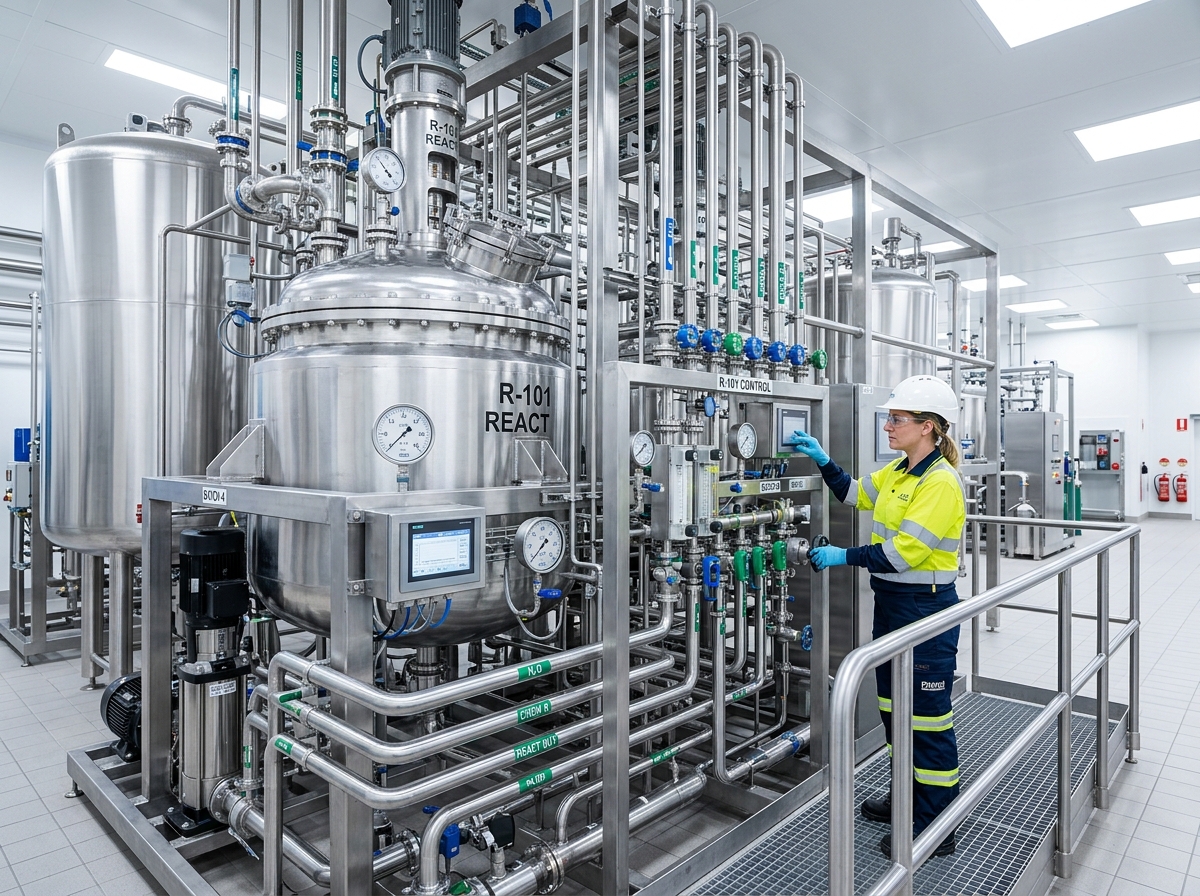
In industrial process reactors serving chemical, polymer, resin, and pharmaceutical industries, reaction kinetics, yield efficiency, and final batch purity depend directly upon thermal transfer performance. Rapid heat removal in exothermic reactions or uniform heat addition in endothermic synthesis represents a fundamental engineering requirement.
1. Jacket Architectures & Heat Transfer Coefficients
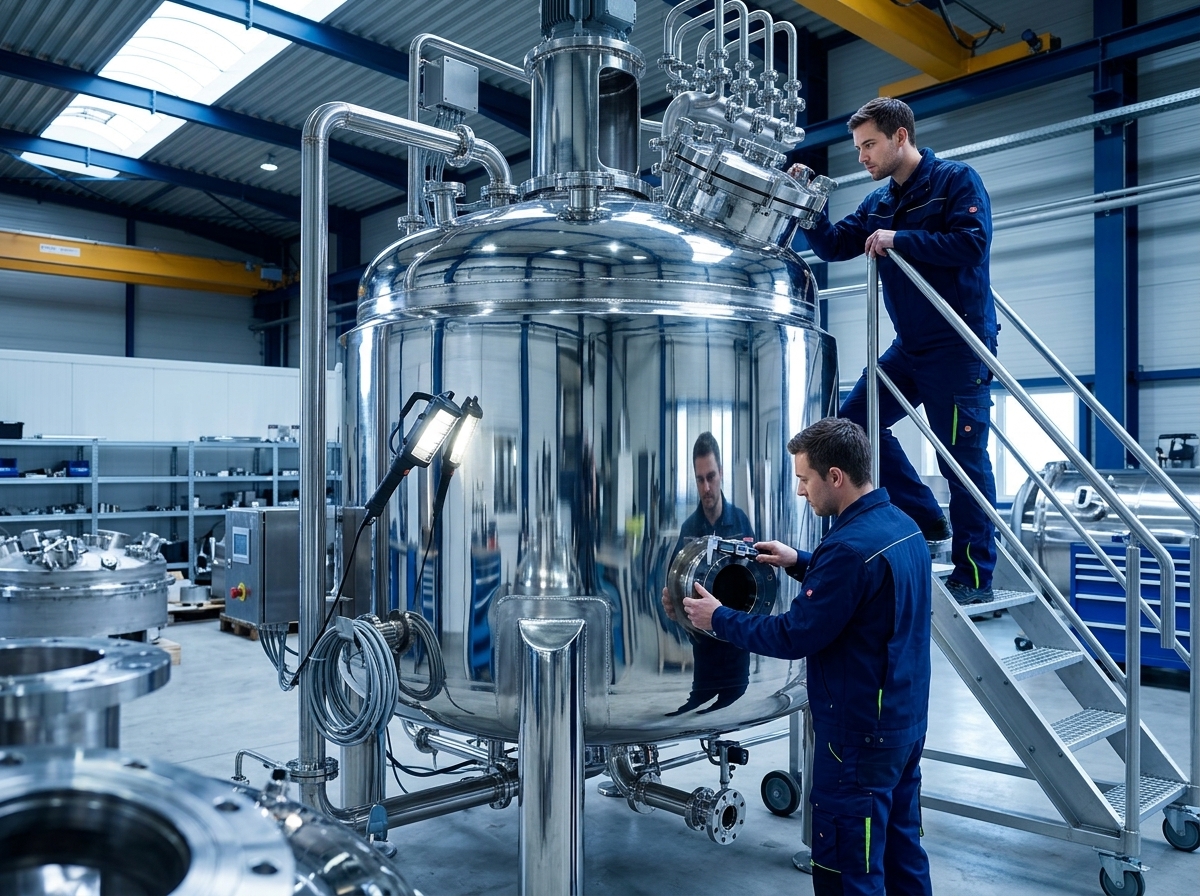
In stainless steel industrial reactor vessels, three main jacket geometries are standard:
- Conventional Plain Double Wall Jacket: Suitable for low-pressure applications and smaller utility vessels, yet restricted by low fluid velocity and laminar boundary layer resistance.
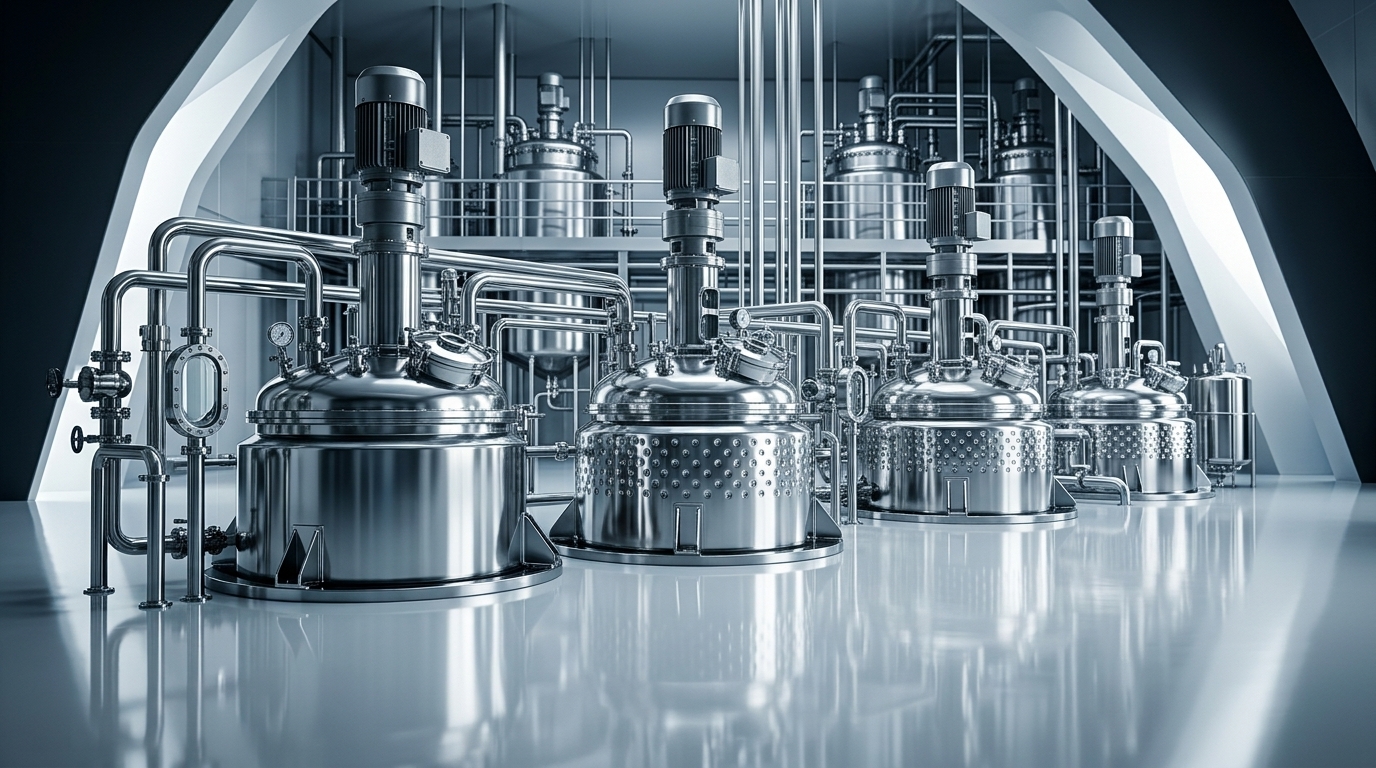
- Dimple Jacket (Spot-Welded Embossed Sheet): Provides high structural strength with thinner vessel walls. The internal dimple points induce continuous turbulence, boosting overall heat transfer coefficients (U-values) by 30% to 45% compared to plain jackets.
- Half-Pipe Coil Jacket: Provides maximum containment integrity for high-pressure thermal oil (up to 300°C) and high-pressure steam utility circuits.
2. CFD Turbulence Simulation & Dead-Zone Elimination
Prior to workshop fabrication, Omi Machine's R&D engineering team simulates each reactor vessel in CFD (Computational Fluid Dynamics) suites. These simulations ensure:
- Prevention of short-circuiting in heating/cooling fluid circuits.
- Complete elimination of low-velocity thermal dead zones.
- Optimization of hydraulic pressure drop (Head Loss) to reduce utility pumping power.
3. Metallurgy & Pitting Corrosion Prevention (AISI 304 vs 316L)
Stainless steel grade selection must account strictly for utility water chloride levels as well as internal batch chemistry. When bore well water or chlorinated municipal water is used in cooling circuits, molybdenum-alloyed AISI 316L or Duplex stainless steels are mandatory to prevent localized pitting and stress corrosion cracking.
4. Engineering Conclusion & ROI Benefits
Optimizing reactor thermal jackets not only trims energy bills but shortens batch cycle times by up to 25%, directly increasing the annual throughput capacity of your plant.
Request Engineering Consultation
Contact our engineering desk to calculate thermal transfer requirements and optimize jacket configurations for your upcoming process vessel.
CONTACT US →